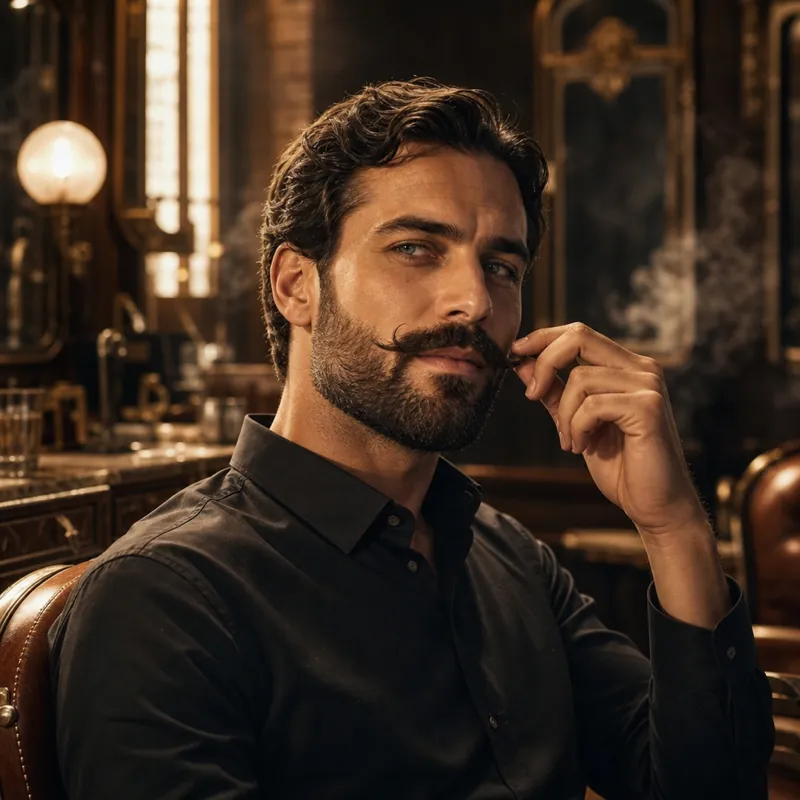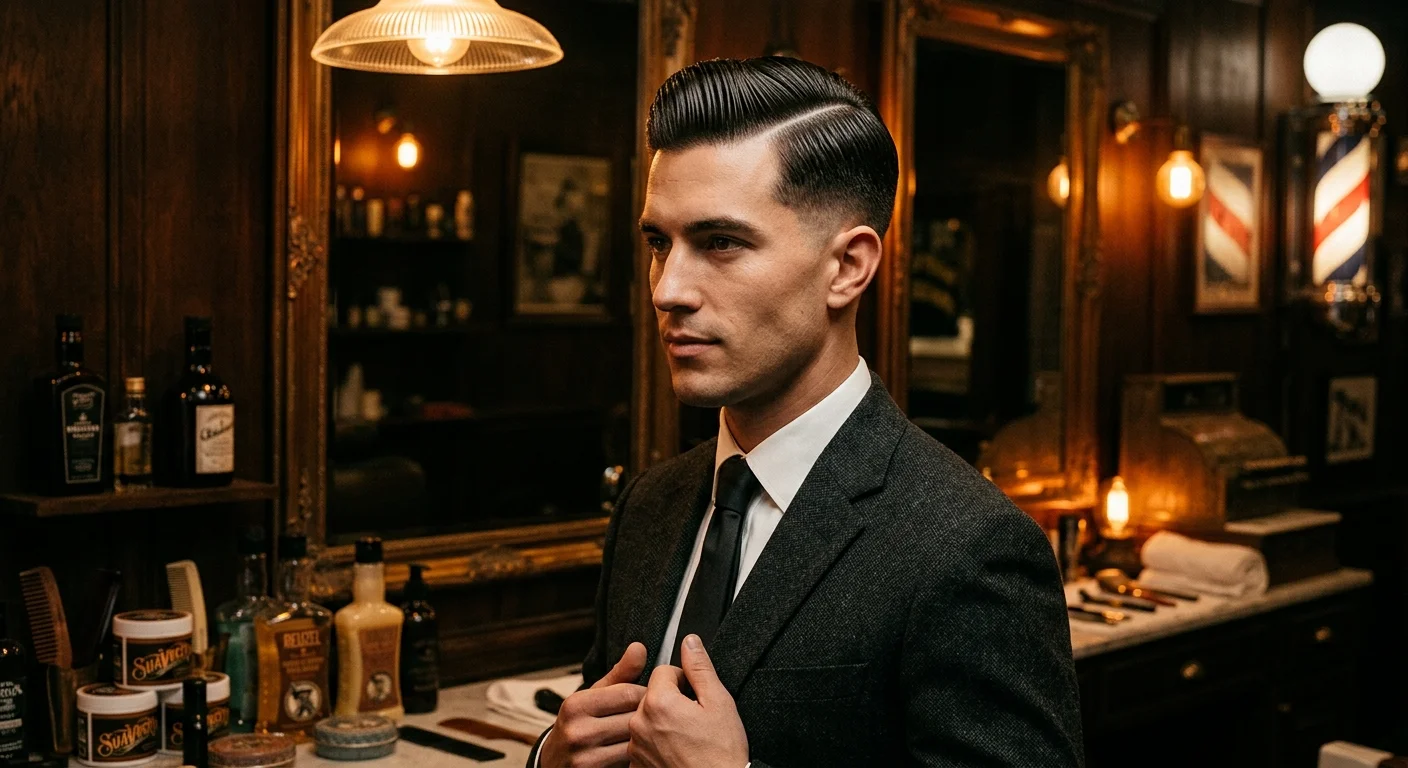
The men who ask about gray in our chairs are never asking to be twenty-five again. They want something smaller and harder to describe: the gray turned down, not turned off. They want to stop being the guy whose beard reads ten years older than his face. That job has a name in the trade, gray blending, and it is not the same service as coloring your hair.
On this stretch of Victory Blvd the question arrives sideways, a dozen times a week. A guy sits down for the usual cut, catches himself in the mirror, and says "my beard's going faster than my head, right?" He is usually right, and he usually assumes the only options are leave it or dye it black. There is a lot of room between those two.
The distinction
Blending is not dyeing, and the difference is the whole point
Full color replaces what is there. Every strand goes to one target shade, gray and non-gray alike, and the result is uniform. That is what men picture when they hear the word color, and it is why they say no. Uniform is what gives it away.
Gray blending does the opposite. It deposits tone so gray strands come down closer to your natural shade without matching it. Some gray stays. Look closely and the silver is still there, just softer. From conversational distance the eye reads a full head of hair instead of a two-tone one, and it does that because the variation survived. The variation is the realism.
The tell
Why the box from the drugstore announces itself
Men come in every month to have a home job corrected, and the mistakes repeat predictably. Three account for nearly everything:
One flat tone
Box color is built to cover completely, so every strand lands at the same level. Real hair carries several shades at once. Flatten that and the eye reads artificial before it reads the color.
Two levels too dark
Almost everyone picks the shade they had at thirty. Skin tone changes with age, and hair that read natural then reads harsh now. A barber matches the face in front of him, not the memory.
Beard darker than the hair
Beard hair is coarser and grabs pigment faster than scalp hair. Same product, same timing, two different results, and the chin lands a shade or two below the head. The most common home-kit outcome we fix.
Home products are not useless, they are the wrong tool. They are built for full coverage, which is the opposite of what most men want.
Two jobs, not one
Hair and beard are different problems
They are priced separately for a reason, and it is not upselling. Hair Color runs 50 minutes at $60, Beard Color 40 minutes at $40. The beard takes less time and costs less, and it is the more delicate of the two.
Beard hair is thicker, more porous at the tip, and sits on skin far more reactive than the scalp. Left as long as the hair on your head, it comes out darker. So the working time is shorter, the tone runs a touch lighter than you expect, and the barber watches it instead of setting a timer and walking off.
Then there is shape. Color does nothing for a beard with no outline; it just makes the mess more visible. If your neckline and cheek line have never been set properly, do that first. Our beard grooming guide covers those three lines. Plenty of men who came in asking about color walked out having only had a shape-up, because that was the actual problem.
The temple question
Most men only want the sides touched
The most common version of this request is not the whole head. It is the temples. Gray arrives there first and heaviest, which is why a man can have a nearly dark head of hair and still see two silver patches every time he turns to the side in the mirror.
Blending the temples alone is often the smartest first move: less product, less time, far less commitment, and an effect out of proportion to the work because that is where the eye lands. It is also the hardest spot to do yourself, since you cannot see the sides of your own head evenly enough to apply anything.
The counterargument is real, though. Silver at the temples against a darker top is a recognized look, not a compromise, and a good barber tells you which camp you are in before touching a bowl.
Timing
How long it holds and what happens as it goes
Give it about four weeks. Deposit-only color carries no bleach and makes no permanent change to the hair, so it washes down gradually instead of sitting there until it is cut out. Wash frequency, sun, and coarseness move that number a week either direction.
Four weeks lines up with the cadence a lot of men are already on. On a two-week fade schedule, the color outlives one cut and wants refreshing around the second, a mismatch worth planning for. Our piece on how often to actually book a haircut maps those rhythms by cut type.
How it leaves matters more than the number. With no hard root line, the fade-out just looks like your hair getting slightly grayer week by week, which it was doing anyway. Decide after one round that it was not for you and you do nothing.
In the chair
What actually happens in those fifty minutes
Nothing about it is dramatic, which surprises people. The sequence runs roughly like this:
- The conversation, in daylight if possible. Tone gets chosen against your skin and your eyebrows, not a chart. Eyebrows are the reference everyone's eye uses to judge whether hair color is plausible.
- The sensitivity question. Reacted to color before, or have eczema or psoriasis on the scalp or face? Say so before anything is mixed.
- Application, sectioned. Worked through in sections so coverage is even, heaviest gray first so it gets the longest working time.
- Processing, watched. The part that decides everything. The barber checks it; he does not wait on a bell.
- Rinse, then cut or style. Color goes on before the finish work, never after, so the cut is shaped around what the hair looks like now.
New to all of this? Our first-timer's guide covers what to say and how much to tip.
The money
What it costs here versus over the hill
Gray blending for men is concentrated on the west side of the city: West Hollywood, the Sunset Strip, downtown. Search for it and you mostly find shops on the far side of the Cahuenga Pass, priced in the same broad range you would pay here, plus the drive. The drive is the real cost. Not the sixty dollars, but forty minutes each way on the 101, every four weeks, for a service that takes under an hour. Recurring appointments die from friction, and distance is friction.
Our numbers are published with the rest of the menu: Hair Color 50 min, $60. Beard Color 40 min, $40. Both stack with a haircut, and the price is the same whichever chair you sit in.
Dapper Fellas – Victory Blvd, Valley Glen
Color sits on our menu as its own line, not an add-on nobody mentions. Hair Color ($60, 50 min) and Beard Color ($40, 40 min) book separately, together, or stacked onto a cut. The most common pairing is beard color with the Dapper Signature Haircut ($50, 45 min), which lands the whole thing inside about an hour and a half.
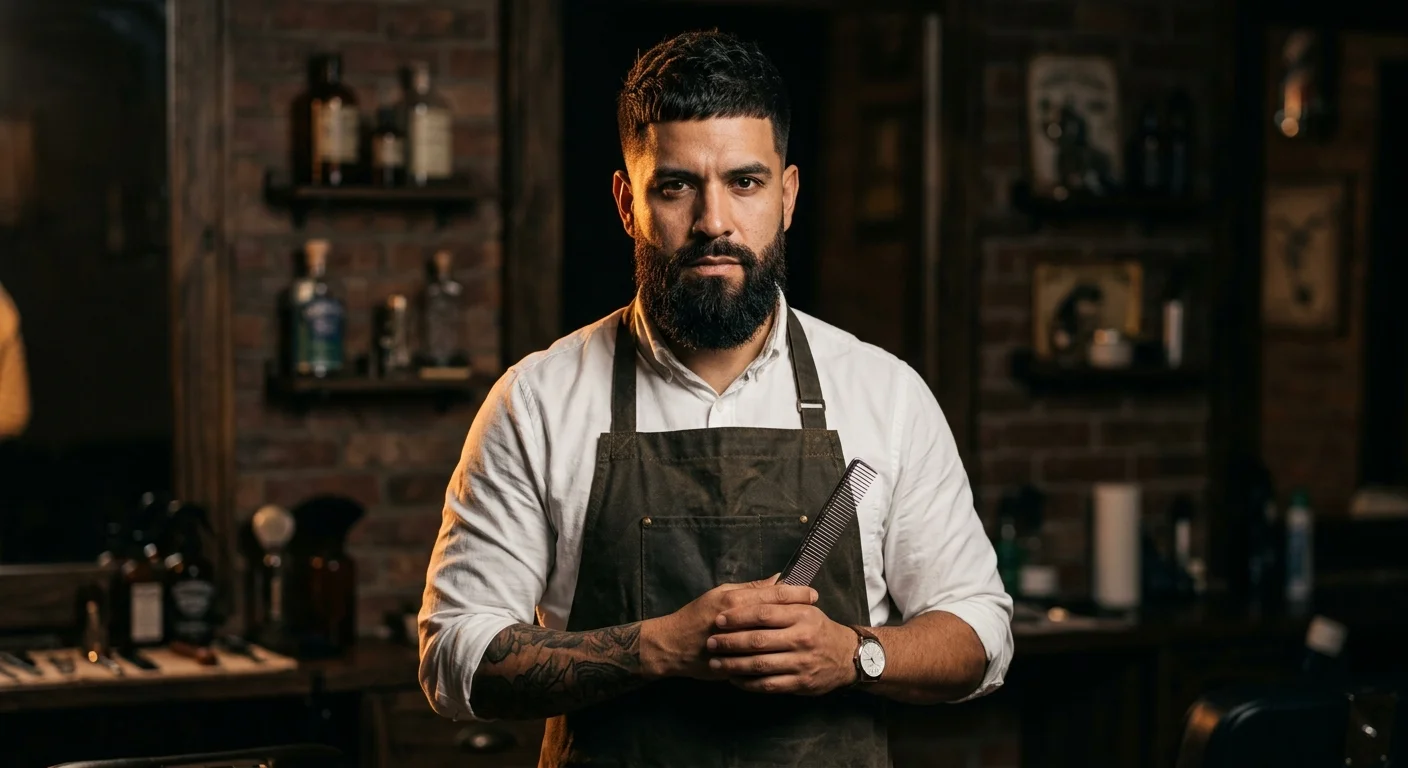
Say the word gray when you book, not when you sit down. It changes how much chair time gets blocked. If the honest answer is that you look better leaving the temples alone, you will hear that instead of a sale. Nine barbers work this floor, ten-plus years each, on Victory Blvd since 2018.
Address: 13059 Victory Blvd, Valley Glen, CA 91606. Open every day, 10 AM to 8 PM. Free parking lot behind the building, plus street parking on Victory. Walk-ins are always welcome, but color is one of the few services worth booking ahead, since it needs a longer block than a cut. Saturdays run a 15 to 30 minute wait.
The neighborhood angle
Why this question is different in the Valley
The hair walking through this door runs thick and dark, a lot of it Armenian, Persian, and Latino, and dark hair shows gray harder because the contrast is higher. A man with light brown hair carries a fair amount of silver before anyone notices; the same percentage in black hair reads across a room.
Coarse dark hair also takes pigment fast, which cuts both ways: it blends well and over-darkens easily, so the margin for error is narrow. The same logic runs through how we approach fades and tapers: the right answer changes with the hair in front of you.
One more thing
Doing nothing is also a decision
Plenty of men ask about it, hear how it works, and decide to keep the gray. Nobody here will push you off that. Gray on a head that is properly cut and a beard that is properly shaped beats blended gray on a head that is neither.
If that is where you land, the money belongs in the cut and the shape-up, which were carrying the look anyway. The color question can wait, or never come back at all.
FAQ
Not if it is blended rather than fully covered. Blending leaves some gray in place, so the hair keeps the natural variation that makes it read as real. What gives color away is uniformity, and uniformity is exactly what blending avoids.
Around four weeks for most men. It fades gradually toward your natural color rather than growing out as a hard root line, so there is no sharp border and no deadline to come back. Coarse hair and frequent washing shift that window by about a week either way.
Yes, and that is how most men book it. Hair Color is 50 minutes, Beard Color is 40, both bookable alongside a haircut. Color goes on first, then the cut is shaped around the finished result. Book both slots so the time is properly blocked.
Facial skin is more reactive than the scalp, so say so before anything is mixed, especially if you have reacted to color in the past or have eczema or psoriasis on the face. That conversation belongs at booking, not in the chair.
Yes, and it is one of the most requested versions of this service. Gray arrives at the temples first and heaviest, so blending only the sides is less product, less time, and less commitment, with most of the visible effect.
Walk-ins are welcome for cuts, but color is worth booking ahead, since it needs a longer block than a haircut. Saying the word gray when you book means the right amount of chair time gets reserved. Booking online takes about thirty seconds.